
This article is for informational purposes only and does not constitute professional mental health advice or create a therapist-client relationship.
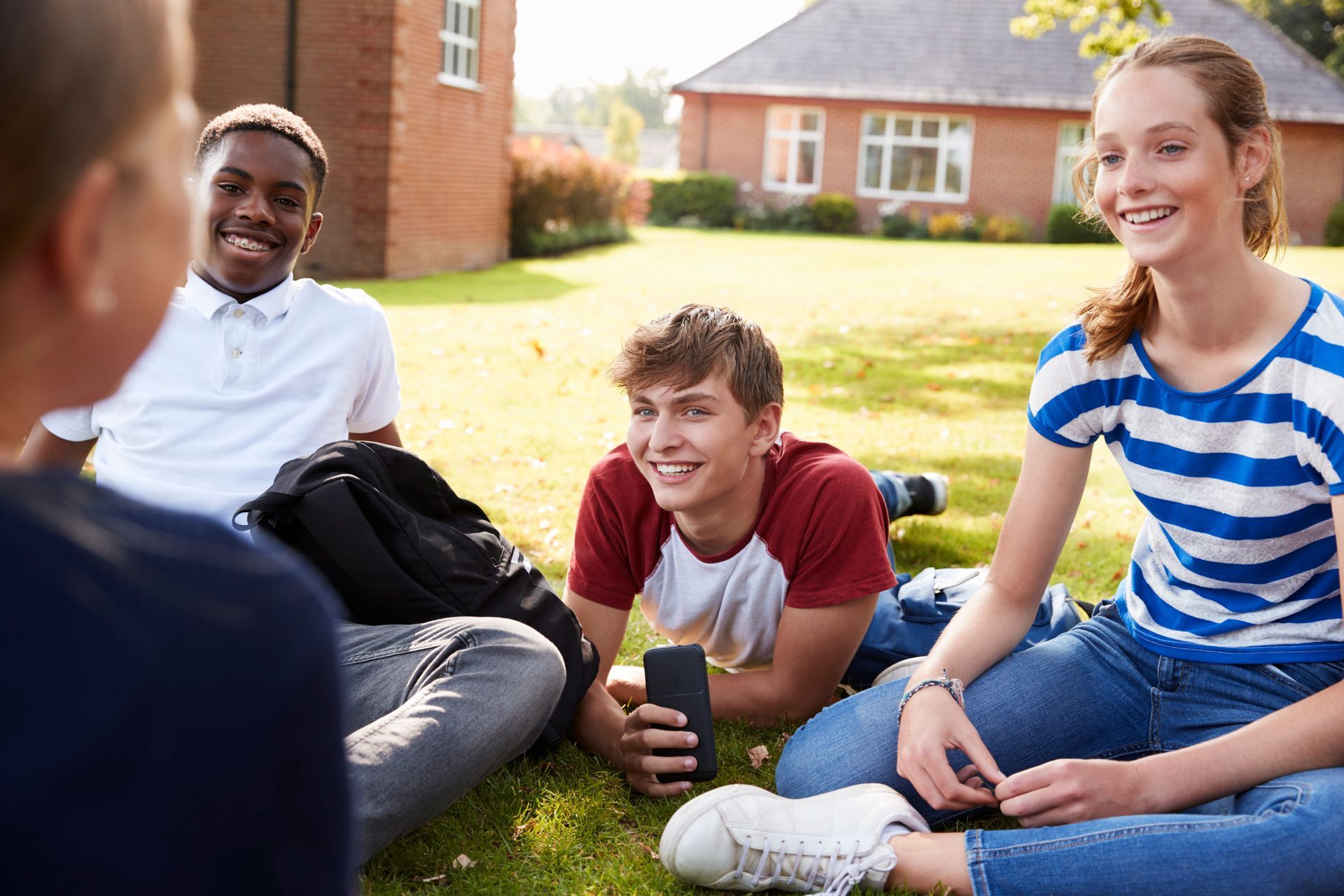
"But what about socialization?" If you homeschool, you've heard this question so many times it barely registers anymore. It usually comes from someone picturing your teen isolated at a kitchen table all day, with no idea how to socialize or make a friend.
Here's the honest answer: socializing while homeschooling isn't automatically a problem, and it isn't automatically fine either. It depends entirely on what you build into the week. Some homeschoolers have rich, genuinely varied social lives. Others end up more isolated than their parents realize, not because homeschool caused it, but because nobody was intentional about it.
This guide covers what the research actually says, why classroom time was never really the gold standard people assume it is, and practical ways to build real peer connection outside a classroom, plus how to tell if your teen needs more intentional support than a busier schedule can give them.
What This Guide Covers
Here's what's ahead: the question almost every homeschooler hears, what the research actually shows, why socialization doesn't have to mean a classroom, real ways to build peer connection, and when it's worth more intentional support. Skip to the FAQ for quick answers.
The Question Almost Every Homeschool Parent Hears
If you've fielded the socialization question a hundred times, you already know the tone it usually comes in: half curiosity, half concern, sometimes a little judgment underneath, the same energy people bring to asking about school choice in general. It's easy to get defensive about it, or to wave it off entirely. Neither response is quite right.
The worry underneath the cliché is real, and worth taking seriously rather than dismissing. Homeschoolers, like any kids and teens, need practice with peers, conflict, group dynamics, and being around people who aren't family. The question isn't whether that matters. It's whether a classroom was ever the only place it could happen.
What the Research Actually Shows
According to the National Home Education Research Institute, 64 percent of peer-reviewed studies on social, emotional, and psychological development show homeschoolers performing statistically significantly better than students in public school, with the rest generally showing no meaningful difference between the two.
That doesn't mean homeschooling automatically produces stronger social confidence. It means the fear that homeschooling inherently harms a child's ability to socialize isn't well supported. What actually predicts a homeschooled child's social development has less to do with the schooling model and more to do with how many real social opportunities they're actually getting, and how comfortable they are taking part in them.
Why Socialization Doesn't Have to Mean a Classroom
A lot of what people picture when they say "socialization" is really just describing public school: a cafeteria, a hallway between classes, thirty kids the same age in one room. That's one version of social experience, not the only valid one, and not necessarily the healthiest.
Classroom socialization also comes with its own downsides that rarely get mentioned in the socialization debate: peer pressure, bullying, and social hierarchies built almost entirely around same-age comparison. Homeschooled teens often get something classrooms structurally can't offer, regular interaction with people of different ages, from younger kids to adults, which builds a different and arguably more useful kind of social skill than surviving a lunchroom.
Adults don't spend their days sorted into rooms with 25 other people born in the same twelve months. Work, community, and family life all involve constant multi-age interaction, and much socialization for adults happens exactly this way. A homeschooled child who's used to talking comfortably with a six-year-old cousin, a coworker at a volunteer shift, and a grandparent all in the same week is practicing something arguably closer to real adult life than a same-age classroom ever was.
Real Ways to Build Peer Connection Outside a Classroom
For any homeschool community, socialization doesn't happen by accident. It takes the same intentionality you already bring to academics. A few things that genuinely work for homeschool families:
- Co-ops and group classes. Regular, recurring contact with the same peer group builds real friendships, not just one-off interactions.
- Sports and structured activities. Team environments teach cooperation, conflict, and shared goals in a way that's hard to replicate elsewhere.
- Volunteering. Interacting with adults outside the family, in a real-world setting, builds confidence and communication skills fast.
- Community and church groups. Multi-age settings where your teen isn't automatically grouped only with same-age peers.
- Field trips. Group outings with other homeschoolers, museums, hikes, local history days, combine learning with real, unscripted social time.
Structured groups. For homeschooled kids who need a more guided, lower-pressure environment, our
Social Skills Group is built specifically for this, smaller group settings where a teen can practice conversation, cooperation, and reading social cues without the size and noise of a full classroom.
None of these need to happen every day, the way a traditional school schedule would demand. What matters more than volume is consistency, the same co-op, the same team, the same volunteer shift, week after week, is what actually builds real relationships instead of a string of one-off interactions.
A Realistic Weekly Rhythm
There's no single right formula, but a rough shape helps more than starting from a blank calendar. Something like this tends to work for a lot of families:
- One recurring, structured commitment. A co-op day, a sports practice, or a weekly class where your teen sees the same peers consistently.
- One lower-pressure social outlet. A youth group, a hobby-based meetup, or time with a small, established friend group, somewhere the stakes feel lower than a formal activity.
- Some unstructured time with peers. Not every interaction needs a purpose or a curriculum attached. Hanging out counts too.
- Occasional multi-age interaction. Volunteering, family gatherings, or community involvement where your teen isn't only around same-age peers.
That's not a packed schedule, it's two or three intentional touchpoints a week. For a lot of families, that's already a meaningful shift from what was happening by default.
When Socialization Actually Needs More Intentional Support
Here's the part most homeschool advice skips: not every homeschooled child is automatically fine. Some genuinely need more structured support to build peer connection, and that's not a homeschooling failure, it's just information.
This is worth a closer look if your teen consistently avoids social opportunities rather than just preferring quiet, seems anxious or shuts down in group settings, struggles to read social cues or hold a back-and-forth conversation, or has become noticeably more isolated over time rather than less. Introversion isn't a problem to fix. A pattern of avoidance, anxiety, or real difficulty connecting with peers is worth paying attention to.
If that sounds familiar, Homeschooling a Teen With ADHD: What Actually Helps covers some of the overlap between attention, structure, and social confidence. Either way, that kind of structured group or individual therapy can help your teen build these abilities directly rather than hoping they develop on their own.
Building This Into Your Homeschool Rhythm
Treat social time the way you'd treat any other part of the curriculum: something you plan for, not something a school schedule handles for you by default. A weekly co-op, a standing activity, a volunteer commitment, doesn't need to be elaborate, it just needs to be consistent.
You don't have to fill every day with activities to get this right. A couple of genuinely engaged social commitments each week does more than a packed calendar your teen dreads. The goal isn't more, it's real.
Frequently Asked Questions
Is socialization actually a problem for homeschoolers?
Not inherently. Research shows homeschooled students generally perform as well as or better than their peers on social and emotional measures, but it depends on the effort put into building real social opportunities.
How do homeschooler kids make friends?
Through recurring contact: co-ops, sports, volunteering, community groups, and any setting where they see the same peers regularly enough to build real relationships, not just one-time interactions.
Do homeschooled kids struggle socially as adults?
The research doesn't support that. Most studies show no meaningful difference, or an advantage, in adult social and psychological outcomes for people who were homeschooled.
How much social time does my teen actually need?
There's no universal number. A couple of consistent, genuinely engaged social commitments each week tends to matter more than a packed schedule.
What if my teen avoids social situations?
Occasional preference for quiet is normal. Consistent avoidance, anxiety in group settings, or difficulty connecting with peers is worth a closer look rather than assuming it will resolve on its own.
Can therapy help with peer connection?
Yes. A structured social skills group or individual therapy can help a teen build these abilities directly, especially when avoidance or anxiety is part of the picture.
Summary & Next Steps
Socialization isn't a myth to dismiss or a crisis to panic over. It's something you build intentionally into your homeschooling, the same way you build anything else. Most homeschooled kids do just fine socially. Some need a bit more structured support, and there's nothing wrong with recognizing that.
If your teen could use more structured practice, reach out and we'll figure out the right fit together.
Book a free consultation and let's take the next step.
SHARE THIS POST:

Bethany Lang
MS NCC NCSC LPC
At Creative Connections, my main goal is to ensure you feel safe and supported while you explore who you are and who you want to become. I want to help you find your strengths and face challenges with confidence.
Whether you're dealing with school stress, friendship issues, or just trying to find your place in the world, I'm here to help you through it.
Our Recent Post:

At Creative Connections, I help young adults feel safe and supported as you discover your strengths and face challenges. Book your free consultation.